We unlock high performance in teams and individuals

Your people are your competitive advantage. We help you turn that advantage into performance.

Get in Touch
Thank you!

Trusted by the world's best organisations

NHL The Executive Centre Google Chelsea FC Clarksons Olympic Rings England Cricket Guidepost Global Education NBA

Lasting transformation doesn't happen by chance. It requires deep insight, powerful narratives and consistent action.

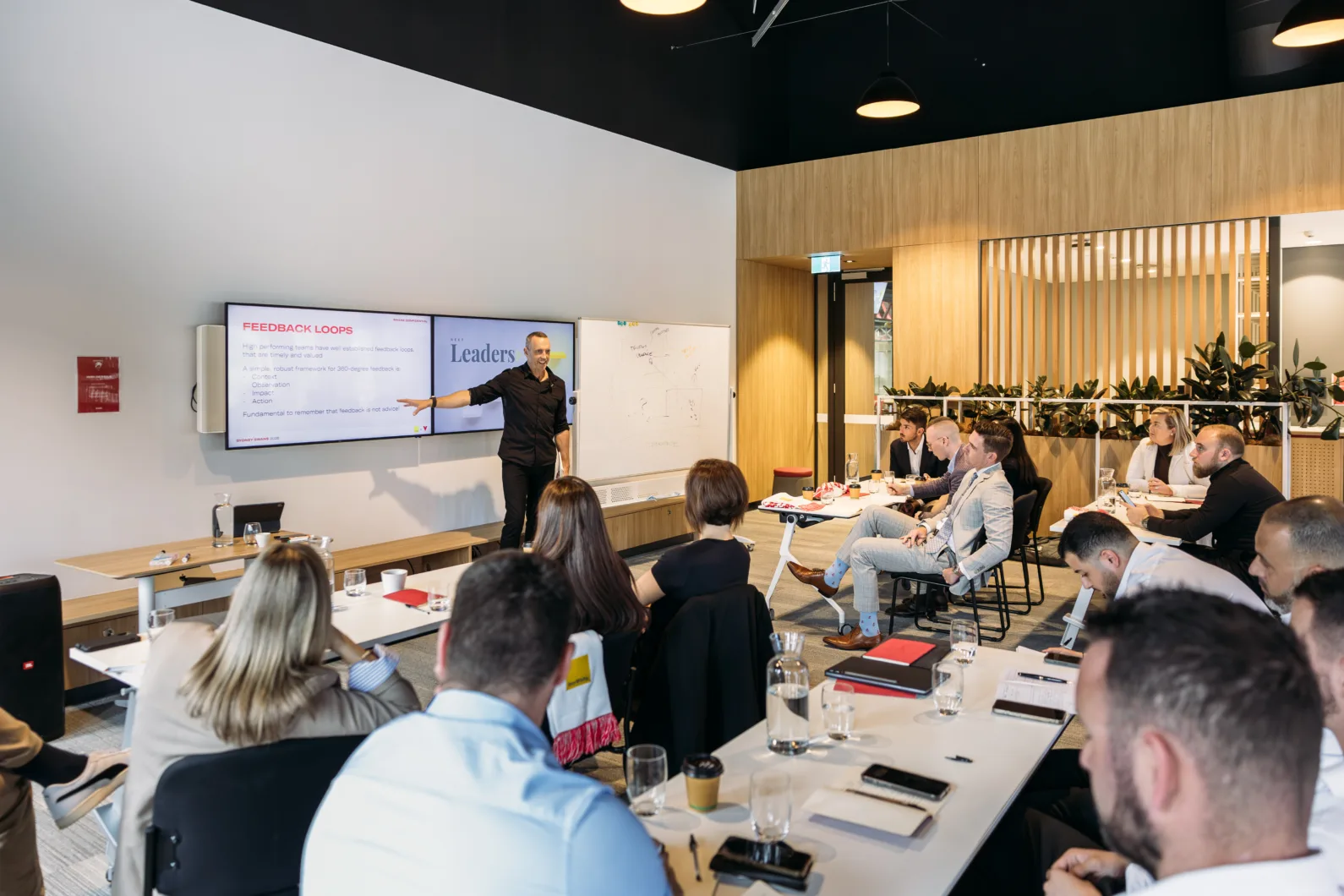
On-site leadership programme workshop in action

Leadership Development

We design bespoke leadership programmes that build self-awareness, sharpen decision-making and create leaders people genuinely want to follow. Every engagement is grounded in real business challenges — not theory.

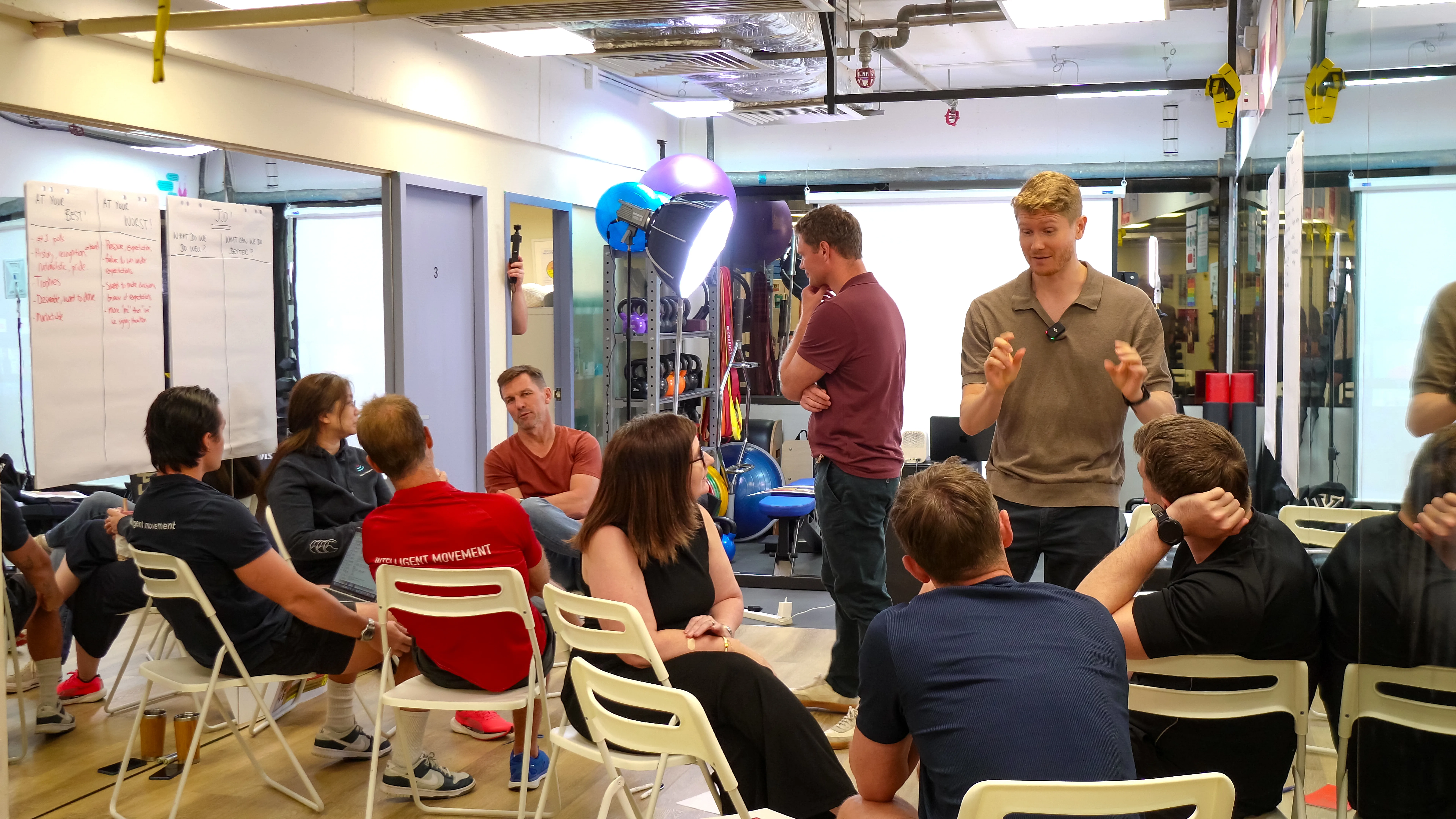
High-performance workshop session

High-Performance Workshops

Interactive, high-energy workshops that align teams around shared goals and unlock collective performance. From half-day intensives to multi-session series, each is crafted to shift mindsets and drive measurable results.

Offsite team experience

Offsites

Transformative offsite experiences that combine strategic work with team bonding. We handle the design and facilitation so your team can focus on what matters — alignment, connection and breakthrough thinking.

Proven Impact

The Numbers Don't Lie

98%
Recommendation Score
Participants who would recommend our programmes to a colleague or peer
9.1/10
Value For Investment
Average rating from clients on the cost-effectiveness of our programmes.
89%
Role Impact
Participants reporting they became more effective in their role following the session.
84%
Performance Improvement
Teams reporting measurable improvement within the first eight weeks.

Client Voices

What Our Clients Have to Say

Fantastic sessions that really broke down what leadership actually is.

Head Coach
USA Soccer Olympic Team

Fun, dynamic and engaging sessions that took us out of our comfort zone.

Senior Director
Clarkson's Shipping

An incredibly valuable experience, that made us rethink how we operate.

General Manager
Healthcare Industry, Hong Kong

I absolutely loved the course - honestly the best one I have been involved in.

Head Coach
Sydney Swans AFL

Fantastic sessions that really broke down what leadership actually is.

Head Coach
USA Soccer Olympic Team

Fun, dynamic and engaging sessions that took us out of our comfort zone.

Senior Director
Clarkson's Shipping

An incredibly valuable experience, that made us rethink how we operate.

General Manager
Healthcare Industry, Hong Kong

I absolutely loved the course - honestly the best one I have been involved in.

Head Coach
Sydney Swans AFL

Sessions with The Leadership Circle were a wonderful experience.

Head Coach
Colorado Avalanche NHL

Will & Harry were brilliant to work with, listening carefully to our context and priorities and designing a brilliant session that really got our team inspired.

HR Manager
Guidepost Education

What a brilliant programme. Absolutely loved it from start to finish.

Senior Leader
Google

Sessions with The Leadership Circle were a wonderful experience.

Head Coach
Colorado Avalanche NHL

Will & Harry were brilliant to work with, listening carefully to our context and priorities and designing a brilliant session that really got our team inspired.

HR Manager
Guidepost Education

What a brilliant programme. Absolutely loved it from start to finish.

Senior Leader
Google

Our Process

Designed For Impact

Lasting behavioural change rarely comes from passive learning.
That's why our sessions are designed to energise, spark curiosity and create moments that stay with people long after the session ends.

01
Understand your context
Engagements begin with a deep understanding of your challenges and objectives, ensuring we focus on what really moves the performance needle.
02
Bespoke programme design
We design a custom experience from the ground up, ensuring learning feels relevant, practical and immediately applicable to your people.
03
High-impact delivery
Through performance insights, storytelling and hands-on development, our sessions are unashamedly interactive and designed to inspire action.
04
Measure & Sustain
Session outcomes are tracked and measured. We work with you to arrange follow ups at key intervals - ensuring change is embedded.

Latest Thinking

Leadership

Why a coaching culture is a critical performance enabler in teams

High performing teams aren't just born - they're developed. We examine what teams can learn from elite coaches in sport.

Read More
Performance

How to embed resilience in your team

Deadlines, shifting priorities, unexpected disruptions and uncertainty are hallmarks of operating in teams. Resilience is more important now than ever before.

Read More
Culture

How to unlock belonging in your organisation

Humans have a biological need to feel connection and belonging. This article explores why great teams shape their culture around belonging.

Read More

Let's Talk

Ready to turn high-performance theory into practice? Let's start the conversation.

Thank you!
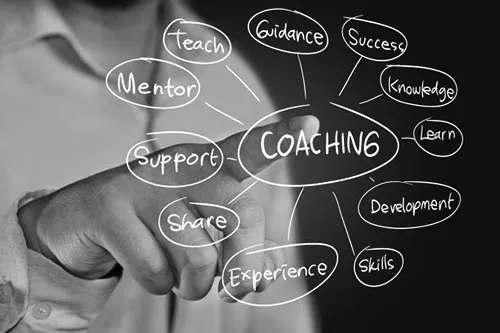
Coaching mind map

Leadership

What Modern Managers Can Learn from Elite Sports Coaching

In an era defined by accelerated change, compressed performance cycles and increasing workforce expectations, one leadership capability is separating high-performing organisations from the rest: effective coaching.

Modern managers are no longer simply task allocators or performance evaluators. They are required to develop capability, sustain engagement, drive accountability, and support wellbeing — often simultaneously. In this environment, traditional command-and-control leadership is insufficient.

The Modern Performance Context

High performing teams aren’t just born — they’re developed.

Every team has the potential to drive high performance but reaching high levels requires both individual and collective growth.

Sport at the top level is well accustomed to the environment many corporate teams find themselves in: razor-thin margins separating wins and losses, constant scrutiny, regular strategy pivots, and results being delivered every few days in full gleam of the watching media and public.

Leaders in sport are, moreover, limited to setting the direction but then watching from the stands — largely removed from the ability to make decisions or meaningful interventions.

Corporate leaders — navigating distributed working structures, continuous transformation programmes and rapid AI integration — rely less on oversight and more on quality preparation, clarity of messaging, trust, and coaching that equips people to make high-quality decisions under pressure.

Gallup reports that only 21% of employees globally are engaged at work, and managers account for at least 70% of the variance in team engagement. At the same time, employees who strongly agree that their manager helps them set clear goals are 3.6x more likely to be engaged.

The implication is clear: high-level coaching is not a perk, but a significant performance enabler.

What Effective Coaching Actually Is

Coaching is not soft encouragement, nor is it the abdication of standards. At its core, effective coaching is the structured process of:

  • Clarifying expectations
  • Providing precise, actionable feedback
  • Creating psychological safety for challenge
  • Tailoring development to the individual
  • Maintaining accountability to agreed standards

As Sir Alex Ferguson famously reflected during his tenure at Manchester United:

“No one ever became a top player without first being coached.”

Elite coaches understand something many organisations overlook: performance improvement is rarely accidental; it is architected through conversation.

Research from the International Coaching Federation (ICF) found that organisations with strong coaching cultures report higher revenue growth, stronger employee engagement, and improved resilience during change. Meanwhile, Google’s well-known Project Oxygen identified “being a good coach” as the single most important behaviour of high-performing managers.

The science supports this. High-quality feedback activates learning and reward pathways in the brain when delivered constructively, but poorly delivered criticism activates threat responses, reducing openness and impairing performance.

Why Business Teams Need Coaching More Than Ever

The shift to hybrid work has reduced incidental learning. Junior employees are no longer absorbing behaviours and standards passively through proximity. AI is automating routine tasks, meaning human value increasingly lies in judgement, creativity, and collaboration — skills that require deliberate development.

At the same time, many organisations still rely heavily on:

  • Annual performance reviews
  • Vague feedback
  • Generic development plans
  • Reactive rather than proactive conversations

Learning through the lens of sport helps us to close the gap by considering how feedback can be immediate in order to offset the “forgetting curve” of working memory, specific, data-informed and delivered individualised and anchored to a clear performance model.

Athletes do not wait twelve months to discover how they are performing. Nor do they receive feedback divorced from observable behaviours.

The modern corporate environment demands the same rigour.

What Elite Coaches Do Differently

When we work in high-performance sporting environments, three principles consistently underpin effective coaching.

1. Clarity of Standards

Elite coaches define what “great” looks like in behavioural and technical terms. Standards are observable, measurable, and reinforced daily.

In business, ambiguity around expectations is one of the most common causes of underperformance. Research from McKinsey shows that employees who understand how their work contributes to organisational goals are significantly more productive and motivated.

Coaching begins with clarity.

2. Individualised Conversations

Elite coaches recognise that while standards are shared, development is individual.

Two athletes in the same position may require entirely different communication styles, motivational levers, and learning interventions. Effective coaches adapt without lowering standards.

In business, this translates to managers understanding individual strengths and development gaps, motivational drivers, career aspirations and other personal context factors.

Deloitte research highlights that employees who feel their strengths are utilised daily are 6x more likely to be engaged.

Coaching is the mechanism through which this alignment occurs.

3. Feedback That Builds, Not Breaks

In high-performance sport, feedback is direct — but it is delivered within a foundation of trust and shared ambition. The purpose is improvement, not ego management.

One renowned team we work with shares a common phrase amongst coaching staff and players that illustrates this point: “if you stab me, do it in the front.”

This distinction matters. Neuroscience research by Naomi Eisenberger and others shows that social rejection or harsh criticism activates the same neural pathways as physical pain. When feedback threatens identity rather than behaviour, performance deteriorates.

Elite coaches separate the person from the performance. They challenge behaviours while reinforcing belonging and belief.

Modern managers must learn to do the same.

The ROI of Coaching

The commercial impact of coaching is measurable.

  • Organisations with strong coaching cultures report 51% higher revenue than their industry peers.
  • Employees who receive regular feedback are 3x more likely to be engaged.
  • Those who are coached are able to coach others. Netflix employees who received six months of coaching noted a 24% increase in their ability to develop others — a trickle-down effect.
  • Teams that prioritise continuous development outperform competitors in adaptability and innovation.

In an environment of sustained volatility, adaptability is competitive advantage. Coaching builds that adaptability.

A Practical Framework for Modern Managers

Forward-thinking organisations are embedding coaching into everyday leadership through four levels:

1. Define the Performance Model

Make standards explicit. What behaviours, capabilities, and outcomes define excellence?

2. Normalise Regular Feedback

Move from annual reviews to regular, structured performance conversations.

3. Develop Coaching Capability

Invest in equipping managers with questioning skills, listening capability, and behavioural feedback techniques.

4. Separate Accountability from Ego

Maintain high standards without personalising critique. Reinforce that challenge is an act of belief, not judgement.

These are not soft initiatives. They are strategic capability investments.

References

  1. Gallup, State of the Global Workplace
  2. Gallup, Manager Engagement Research
  3. International Coaching Federation (ICF), Building a Coaching Culture Report
  4. Google, Project Oxygen
  5. Rock, D. (NeuroLeadership Institute) – Feedback and Threat Response Research
  6. McKinsey & Company – Organisational Performance & Productivity Studies
  7. Deloitte – Global Human Capital Trends
  8. Eisenberger, N. – Research on Social Pain and Neural Threat Responses

Team resilience in sport

Performance

Winning Mindset: Why Resilient Teams Need Resilient Individuals

In a business climate defined by volatility, ambiguity and relentless pace, resilience has become one of the most cited — and least clearly understood — leadership capabilities. For HR leaders and corporate executives navigating restructuring cycles, AI transformation, talent shortages and sustained performance pressure, resilience is no longer a wellbeing initiative. It is a commercial necessity.

But resilient teams do not emerge from mission statements or vague team-building activities. They are built — deliberately — through the development of resilient individuals. Elite sport has long understood this principle. Organisations are now catching up.

The Modern Performance Reality

High-performance is the goal of most organisations. Yet, several pressure points mean employees are feeling squeezed from all angles.

Firstly, workplace dynamics are shifting at breakneck speed. Economic volatility, market uncertainty, AI adoption and evolving expectations mean employees are working in a state of flux. The result is many are stuck in reactive mode, scrambling to regain control.

Secondly, with demands piling up — more responsibilities, bigger teams, less time — the weight of expectations can feel suffocating.

Thirdly, with hybrid work transforming the way teams operate, employees are navigating an entirely new world of work — attempting to stay connected, dynamic and adaptable.

For managers and leaders, the issue is more profound. 75% of managers report feeling overwhelmed by the expansion of responsibilities whilst being 36% more likely to feel burnt out.

According to the 2023–24 State of the Global Workplace report from Gallup, only 23% of employees globally are engaged, while 44% report experiencing daily stress. Teams experiencing high engagement show significantly higher profitability and lower absenteeism than their peers.

At the same time, research from McKinsey & Company finds that organisations in the top quartile for organisational health deliver three times greater total shareholder returns than those in the bottom quartile. Adaptation, emotional steadiness and decision clarity under pressure are not soft attributes in this context. They are commercial multipliers.

“Performance is a privilege” is a common soundbite regurgitated by those operating at the highest levels of sport. Cliche aside, elite sport treats pressure as inevitable and therefore prepares for it. Organisations must do the same.

What Resilience Actually Is (And Isn’t)

Resilience is often mischaracterised as toughness, endurance, or emotional suppression. In performance psychology, resilience refers to the capacity to maintain or rapidly regain effective functioning during stress or adversity.

Research by Martin Seligman on explanatory style demonstrates that individuals who interpret setbacks as temporary and specific — rather than permanent and personal — outperform peers over time. In sales environments, optimistic explanatory style predicted measurable revenue differences.

Similarly, work by Angela Duckworth shows that perseverance and sustained effort — “grit” — are stronger predictors of long-term achievement than IQ or raw talent in multiple high-performance domains. Importantly, both explanatory style and perseverance can be developed. Resilience is not fixed at hiring. It is trainable.

Teams Mirror Individual Psychology

Executives often speak about “resilient cultures.” Culture, however, is the aggregation of individual responses under pressure. Research by Amy Edmondson on psychological safety demonstrates that teams where individuals feel safe to speak up, admit mistakes and challenge thinking outperform fear-based environments on innovation and learning metrics.

Meanwhile, the Global Human Capital Trends research from Deloitte highlights that organisations prioritising workforce resilience report higher readiness for change and improved financial performance during transformation periods. When uncertainty rises, individuals default to habit. If those habits include blame, withdrawal or defensiveness, collective performance deteriorates quickly.

Conversely, when individuals display emotional regulation, constructive challenge and rapid recovery after setbacks, teams stabilise faster and adapt more effectively.

Lessons from Elite Sport: Resilience Is Trained

In elite sport, psychological preparation is as structured as physical training. Three principles consistently underpin resilient performance.

1. Pressure Is Simulated

Championship environments rehearse adversity. Athletes train in scenarios that replicate competitive stress so that emotional regulation becomes automatic. This concept aligns with stress inoculation research in performance psychology, demonstrating that graduated exposure to pressure improves coping responses and performance under real conditions. Corporate environments often do the opposite — insulating teams from pressure until crisis hits at scale. Resilient organisations prepare people in advance.

2. Recovery Is Engineered

Performance is cyclical. Recovery is strategic. Research by Daniel Kahneman demonstrates how cognitive depletion impairs judgement and increases error rates. Sustained decision fatigue narrows thinking and elevates threat sensitivity. Elite sport builds oscillation into training cycles — intensity followed by deliberate recovery. Corporate cultures that valorise constant availability erode the very cognitive resources required for adaptive thinking. Response quality depends on recovery capacity.

3. Identity Is Anchored Beyond Outcome

When identity fuses with short-term results, setbacks trigger threat responses. Neuroscience research by Naomi Eisenberger shows that social rejection and harsh evaluation activate the same neural pathways as physical pain. When individuals perceive performance feedback as identity threat, cognitive flexibility narrows. Elite performers are trained to separate self-worth from immediate outcomes. Results fluctuate. Capability evolves. That distinction preserves learning agility — a decisive advantage in fast-changing markets.

The Commercial Case for Resilience Development

For executives, resilience must link to measurable performance.

According to Gallup meta-analyses, highly engaged teams show:

  • 21% higher profitability
  • 18% higher productivity
  • 59% lower turnover in low-turnover organisations

Engagement and resilience are interdependent. Sustained engagement requires the psychological capacity to handle pressure without burnout. Research from McKinsey & Company indicates that organisations demonstrating high organisational health — including trust, clarity and leadership stability — outperform peers significantly during economic downturns.

Resilient individuals:

  • Make clearer decisions under uncertainty
  • Recover faster from setbacks
  • Sustain discretionary effort
  • Model emotional steadiness
  • Maintain learning orientation under scrutiny

These behaviours translate directly into execution quality.

A Practical Framework for HR and Executive Leaders

Forward-thinking organisations embed resilience development through four levers:

1. Normalise Conversations About Pressure

Open dialogue reduces stigma and strengthens coping efficacy.

2. Teaching Psychological Skills

Cognitive reframing, attentional control, emotional regulation and recovery strategies are trainable capabilities grounded in decades of performance psychology research.

3. Develop Leaders First

Executive emotional tone cascades. Research consistently shows managers account for up to 70% of variance in team engagement (Gallup).

4. Embed Reflection Into Performance Cycles

After-action reviews and structured debriefs convert adversity into developmental data rather than reputational threat. These are strategic investments in performance architecture — not wellbeing add-ons.

Why This Matters Now

AI acceleration, hybrid work and continuous transformation are increasing cognitive load across organisations. Technical capability is necessary but insufficient. Human adaptability is becoming the defining advantage.

Elite sport offers a parallel: when margins narrow, psychological preparation differentiates champions from contenders. Business is entering the same era.

References

  1. Gallup – State of the Global Workplace; Employee Engagement Meta-Analysis
  2. McKinsey & Company – Organisational Health Index; Performance & Productivity Studies
  3. Martin Seligman – Research on explanatory style and learned optimism
  4. Angela Duckworth – Grit and long-term achievement studies
  5. Amy Edmondson – Psychological safety research
  6. Naomi Eisenberger – Social pain and neural threat response research
  7. Daniel Kahneman – Cognitive load and decision-making research
  8. Deloitte – Global Human Capital Trends
Team belonging in sport

Culture

Belonging As A Critical Performance Enabler in the Modern Company

In an era marked by rapid technological change, distributed teams, and unprecedented disruption to traditional workplace norms, one organisational imperative has never been clearer: belonging matters — and science proves it. For leadership teams striving to build adaptive, resilient cultures, understanding and prioritising belonging is a fundamental requirement.

The last decade has seen two seismic shifts in how work gets done:

  1. Remote and hybrid work disaggregating traditional social anchors — conversations in the canteen, daily face-to-face interactions and the informal drinks after work.
  2. AI and automation reshaping roles, expectations, and psychological safety — prompting both exhilaration and anxiety among teams.

While these forces have unlocked flexibility and performance in many respects, they have also created fragmentation, ambiguity, and a rising sense of isolation in the workplace. When employees feel disconnected, performance suffers: only 50% of employees in hybrid arrangements report belonging strongly to their organization.

What Is Belonging?

Belonging is more than camaraderie or a positive “vibe.” At its core, it is a fundamental human need — woven into our neural architecture. Acclaimed author of Belonging (and someone we’re fortunate to work with) Owen Eastwood notes it as a “wildly undervalued condition required for human performance.”

Social neuroscientist Matthew Lieberman has described belonging as the feeling of acceptance, being seen and included. When inclusion is high, the brain’s reward circuits activate; when exclusion increases, threat systems light up.

In organisational terms, this means:

  • Belonging fuels cognitive openness, creativity, and collaboration.
  • Lacking belonging triggers threat responses, narrowing attention and reducing trust — the very things organizations need most in complex, ambiguous environments.

The Business Case: Belonging Drives Performance

The data is compelling:

  • Teams with high belonging report 56% greater job performance and 50% fewer safety incidents.
  • Employees who feel they belong are 5x more likely to innovate and 3x more likely to stay with their organization.
  • Organisations with strong inclusion cultures outperform their peers by 35% in financial returns.

These figures underscore a critical insight: belonging isn’t just ethically desirable — it’s a measurable driver of value creation.

Sport as a Microcosm for Belonging

When invited to present or run workshops on belonging for corporate teams, we utilise several compelling stories from our experience working with elite sports teams which serve as a mechanism to move people emotively in order to create behavioural shifts.

Gareth Southgate’s tenure of the England football didn’t begin with tactics or penalty shoot-out practice. It began by re-connecting players to the history of the team and establishing an identity story that underpinned shared values.

Similarly, South Africa cricket’s remarkable rise to the top of the game, was rooted in conversations about building a culture that players genuinely belonged to — regardless of race or religion.

For teams needing to accelerate cohesion in what is a typically high-turnover industry, lay the foundations for challenge, accountability and incredibly honest feedback to occur without eroding trust and culture, belonging is often where they start. Three principles that corporate leaders can learn from:

  1. Belonging creates identity. The choice of leaders is not whether their team or company has an identity, but what identity they choose to drive. The most powerful examples we’ve seen are identities with a compelling shared-purpose where people feel motivated and clear in where their contribution lies in achieving success.
  2. Rituals anchor belonging. From warm-ups to debriefs, meeting introductions to rewards — rituals create neural cues of safety, coherence and consistency.
  3. Feedback is frequent and grounded in trust. Athletes expect honest, systematic feedback — not as criticism, but as a contribution to excellence. Feedback that reinforces belonging doesn’t water down the honesty — it accentuates the value.

These principles mirror what the research says about belonging: cohesion enhances performance, resilience, and adaptability — whether on a field or in a virtual workspace.

Why Belonging Matters More Today

Today’s workplace amplifies threats to belonging: remote and hybrid work reduces incidental social interactions — a key source of belonging cues. The threat to distributed teams is a lack of shared purpose and context whilst the rapid acceleration of AI has created uncertainty and worry about roles.

Many of the companies we work with are now operating in a state of sustained volatility, characterised by continuous strategic pivots, compressed decision cycles, and heightened performance expectations. This creates persistent cognitive load for leaders and teams, who must navigate ambiguity, result in real time, and make high-stakes decisions without stable reference points. In such an environment, uncertainty is not episodic; it is structural — and the ability of organisations to maintain cohesion, clarity and psychological safety becomes a critical determinant of performance.

Therefore, leaders who fail to prioritise belonging risk not only engagement declines, but strategic stagnation, as fear and uncertainty fill the gaps left by connection.

A Framework for Building Belonging

Forward-looking organisations don’t leave belonging to chance. They embed it in measurable cultural levers:

  • Purposeful Group Identity: Clarify “why we exist” beyond quarterly targets. Create a powerful ‘identity story’ and subsequent narratives that people tangibly want to belong to.
  • Inclusive Rituals: Establish routines (onboarding, check-ins, reflection loops) that reinforce mutual understanding and psychological safety.
  • Feedback Practices: Build predictable, non-punitive feedback loops that normalise growth. Invest in the skillset of your managers to be able to deliver feedback that creates impact.
  • Shared Challenges: Design work that requires interdependence — enabling teams to experience competence and contribution together.

These aren’t feel-good programs; they are strategic investments grounded in neuroscience and organisational psychology.

Conclusion: Belonging As a Strategic Lever

In a world reshaped by remote work and rapid AI disruption, organizations face an urgent imperative: restore and reinforce belonging as a cultural underpinning. The science is clear — belonging drives individual, team, and organisational performance. Sport gives us a powerful lens for how cohesion translates into results under pressure.

For today’s leaders, building belonging is not an HR initiative. It is a leadership priority that determines resilience, adaptation, and competitive advantage in a world where human connection is both more essential and more fragile than ever.

References

  1. Harvard Business Review, 2023 – “The Belonging Deficit in Hybrid Work”
  2. Belonging 2021 – Owen Eastwood
  3. Lieberman, M. Social: Why Our Brains Are Wired to Connect (2013)
  4. BetterUp Research, Belonging & Performance Metrics
  5. Deloitte Global Human Capital Trends
  6. McKinsey Diversity & Inclusion Report